

We living beings breathe every single instant. However, it’s only the quiet times when we actually try to pay attention to our breath. To our amazement, our bodies, minds, and emotions are profoundly affected by how we breathe. When we talk about breathing yoga, it is more than just inhaling and exhaling; it’s a potent tool for self-awareness, healing, and balance for the greater good.
Yoga tells us that we may relax our minds by controlling our breathing. The yogic science of breathing, pranayama, is crucial in this situation. Regular pranayama practice enhances mental clarity, emotional stability, oxygen flow, and the body’s lung capacity. As the cornerstone of both physical and spiritual yoga practice, Yogaadi teaches breathing methods.
In this blog, let’s examine various yoga breathing techniques and see how each promotes a person’s overall health.
The Importance of Breathing in Yoga
The body and the mind are connected through breathing. Stress, exhaustion, and loss of concentration are frequently caused by shallow or erratic breathing. The human respiratory system is trained to operate effectively and deliberately through yoga breathing.
Yogic breathing is slow, deep, and focused in contrast to regular breathing. It helps the neurological system, enhances circulation, and primes the body for advanced yoga and meditation techniques. These yogic methods also naturally improve your regular breathing patterns over time.
Clavicular Breathing (Upper Chest Breathing)
The shallowest type of breathing, clavicular breathing, primarily engages the upper lungs. Each inhale in this breathing technique causes the collarbones and shoulders to rise slightly.
When under stress, worry, or panic, this breathing pattern tendency often occurs. Clavicular breathing is typically not used as a stand-alone method in yoga, but rather as the last phase of a deep inhalation. Learning clavicular breathing makes practitioners more conscious of bad breathing practices, even though it is not the best method for everyday breathing. The first step to improvement and correction is awareness.
Thoracic Breathing (Rib Cage Breathing)
Using the middle part of the lungs, the thoracic breathing technique concentrates on expanding the rib cage. This way, the rib cage moves outward during inhalation and inward during exhalation.
This breathing technique supports better posture and chest mobility, allowing greater air intake than clavicular breathing. Additionally, it helps relieve tension in the rib muscles. Thoracic breathing in yoga poses helps the body in standing and sitting positions, where steady breathing promotes balance and stability.
Diaphragmatic Breathing (Abdominal or Belly Breathing)
It is one of the most crucial breathing technique in yoga is the diaphragmatic breathing. It expands the lower lungs by fully utilizing the diaphragm. The abdomen rises with inhalation and softly lowers with exhalation.
In addition to supplying the body with as much oxygen as possible, this breathing technique stimulates the parasympathetic nervous system, which promotes relaxation. It is particularly beneficial for lowering mental exhaustion, tension, and worry.
Since diaphragmatic breathing serves as the foundation for more complex pranayama and meditation techniques, it is frequently the first breathing method taught to novices at Yogaadi.
Yogic Breathing
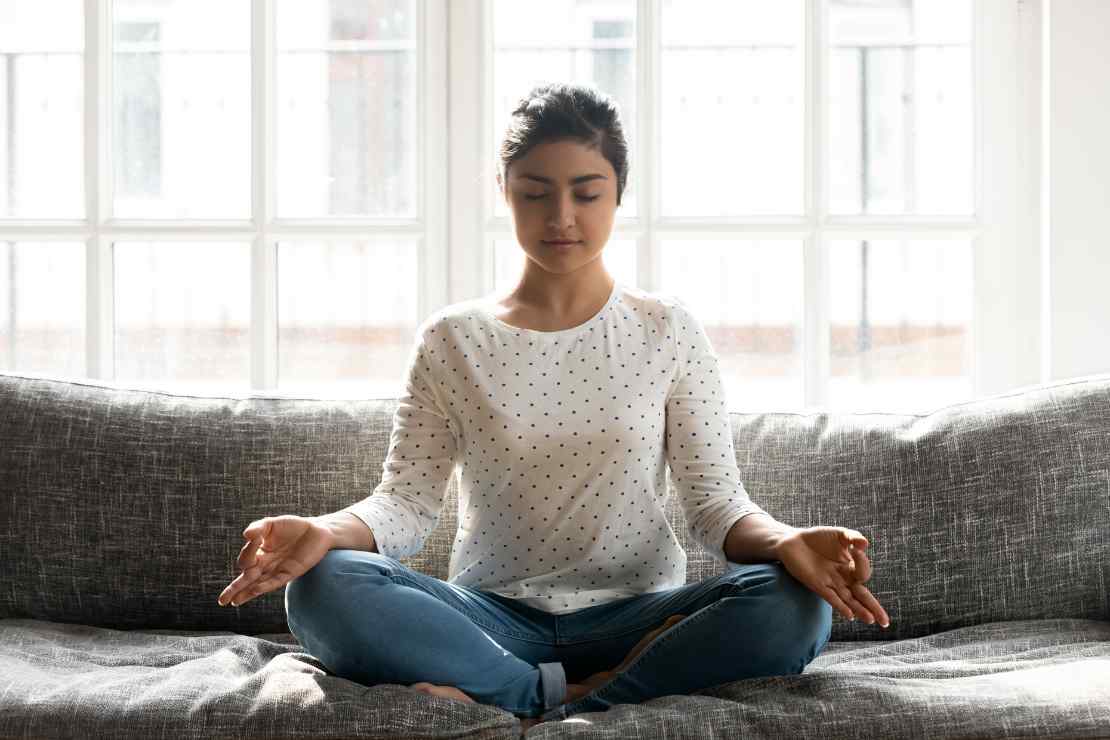
The most comprehensive and balanced breathing technique in yoga is yogic breathing, often known as “full yogic breath“. It is the delicate blend of clavicular, thoracic, and diaphragmatic breathing into a single, smooth breath. The inhale starts right from the abdomen, goes ahead and spreads to the ribs, and finally ends in the upper chest. This entire process is gently and slowly reversed during the exhale.
This method maximizes the lung capacity, enhances oxygen delivery, and promotes mental and physical balance in a human being. Frequent practice enhances vigor, emotional equilibrium, and focus.
A crucial component of yoga teacher training programs, yogic breathing is considered one of the healthiest breathing techniques.
How Breathing Techniques Are Taught at Yogaadi
At Yogaadi, breathing is not treated as a separate practice but as the heart of yoga. Whether it is asana, pranayama, or meditation, correct breathing is always emphasised.
Students at the institute are guided step by step, starting from basic awareness of breath to more refined techniques. Moreover, the peaceful environment, surrounded by the beautiful nature of Uttarakhand- Rishikesh, and the combination of experienced teachers, help students connect deeply with their breath and inner self.
Yogaadi’s yoga training focuses on the traditional yogic wisdom while making it accessible to modern-day yoga practitioners. This balanced and practical yogic breathing approach helps students come, learn, and build a strong yogic foundation in both physical practice as well as the inner awareness towards self.
Why Learning Breathing in Rishikesh Makes a Difference
Yoga is said to have originated spiritually in Rishikesh. Breathing exercises are naturally enhanced when practiced in this hallowed environment. The serene atmosphere of the location, surrounded by the Himalayas and the Ganges, encourages deeper study and metamorphosis.
Yogaadi offers genuine yoga teacher training in Rishikesh, where students experience the authentic yogic way of life alongside learning techniques.
Conclusion
The link between the body and the mind is breathing. We can learn to breathe with awareness, depth, and balance by using yoga detox breathing techniques like clavicular, thoracic, diaphragmatic, and complete yogic breathing.
We may lower stress, enhance our health, and gain clarity in our lives by consistently putting these strategies into practice. Yogaadi teaches breathing as a life skill that promotes self-discovery, inner serenity, and power. Learning to breathe consciously can significantly change your yoga practice, regardless of your level of experience.
FAQs
In yoga, what is yogic breathing?
Yogic breathing, sometimes referred to as complete yogic breath, is a method that makes utilization of the entire lung capacity by combining clavicular, thoracic, and diaphragmatic breathing.
What distinguishes pranayama from regular breathing?
Normal breathing is automatic, while pranayama requires deliberate breath control. Both mental clarity and respiratory function are enhanced by pranayama.
What is the most effective breathing method for unwinding?
Because it stimulates the parasympathetic nervous system and lowers tension, diaphragmatic or belly breathing is ideal for relaxation.
Is it possible for novices to practice yoga breathing?
Yes, novices can learn yogic breathing under supervision. It prepares the body for more difficult yoga poses and aids in the development of awareness.
Why do yoga instructors in Rishikesh study breathing techniques?
Learning breathing techniques in Rishikesh provides a greater grasp of ancient pranayama practices, an authentic yogic setting, and knowledgeable instructors.